Isn’t it special when you see children out and about and they are carrying on, laughing and having fun with their friends?
As adults, sometimes we may look at them and think…wow, I wish I had all that energy!
You know first hand how it feels to be kind, gracious and outgoing in public places. It makes us feel good when we can cheerfully greet someone either by using good eye contact or shaking someone’s hand.
We understand what it feels like to make eye contact with someone and say “good morning”.
Children benefit from someone pointing these simple gestures out and explaining how and why these acts of kindness and confidence matters.
Practical Points to Teach Manners to Children
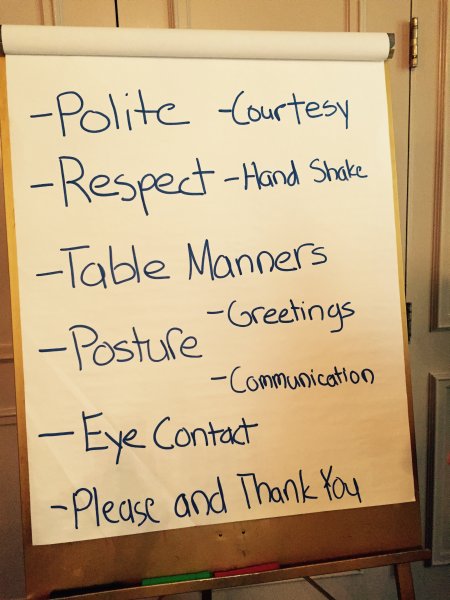
Eye Contact: This simple act makes a world of difference for so many children.Try this: if you have younger children (ages 3-6), kneel down to their level (yes, on your knees) and look them directly in the eye and speak to them.Watch children light up when you do this.Show them what it means to make good eye contact.
Ask them how it feels.Explain to them how others feel when they receive good eye contact. Others feel respected and heard.
Greetings:What a difference a day makes when someone greets you with a “good morning”.Teach children to say “hello” to those they run into during their time out and about.
Excuse Me:If you bump into someone, say “excuse me”.Make eye contact as you are saying it so the other person knows you are sincere.
Hold the Door Please:As you are exiting or entering a building, hold the door for the other person.Have you ever had a child do this for you?It is endearing and memorable.This gesture teaches respect and deference.
Gratitude: Expressing appreciation is the highest form of respect.There are so many ways to show gratitude.A very important step is to say “thank you” often during the day.
Was it memories of a warm bustling kitchen or conversations with belly laughs from cousins you had not seen in a while?
I bet you want your family to experience this time with those that are near and dear to you.
You have been on my mind and I am here to guide you to a pleasant holiday.
You want your child to have fun and be confident in all the social situations they experience.
That is why I am sharing these pointers and tips with you today.
Tips from Manners To Go on How To Prepare Your Child for Thanksgiving
Greetings: At Manners To Go, we are big on greetings.Make eye contact, say hello and smile.
Talk about what you do like:This goes for food and all the other popular topics.
When you don’t like something that is being passed: Aunt Sue serves her famous carrot salad with peas on top. Here is how to guide your child in this situation: tell them to keep passing it….do not give any details as to why they are passing, they can say “no thank you” but that is it.
If the meal is plated and handed to them, tell them to smile, say “thank you” and eat what they like.
Wait:Wait until the appropriate time to start eating.This depends on your table, host and if the meal is served as a buffet.
Napkin:When seated, have your child place the napkin in their lap.
Which way to pass:Pass to the right so that everyone is served.
Gratitude: Oh so important and of course, there are many teachable moments during this holiday. Have your child express appreciation to the host or family member as they are leaving or after the meal.
More on gratitude and writing thank you notes later.
Enjoy your holiday.
At Manners To Go, We Believe Every Child Deserves the Chance to Learn Good Manners
Teaching Manners and the History of AfterSchool Programs in America
Afterschool programs are an intricate part of our education system.
You will benefit and have a deeper understanding on the history of afterschool programs as you are watching this film.
I was glued and learned so much thanks to Temescal Associates and the How Kids Learn Foundation. A link to the hour long film is below in the Manners To Go Resource Guide.
After care programs for children date back to the late 1880’s. We brought families from our farm lands and other countries to work in our factories.
Settlement houses were started to meet the huge demand for child care.Immigration labor and women working created a need for child care.
Fast forward to today and we can no longer think of afterschool programs as a need to reduce crime or keep children off the streets. While after care does meet those needs it is so much more.
Afterschool programs offer our youth:
A chance to build skills
Explore their interests outside of the traditional classroom
Teaching manners and life skills in your classroom has never been easier. We guide you every step of the way. At Manners To Go, we help you implement a character building and social skills program into your classroom.,
Your job is to watch your students transform.
Have you downloaded your FREE Lesson Plan? We have one for each grade level.
You know the importance of teaching good manners, life skills and character in your classroom. We can no longer take the stand that life skills and manners should be taught at home. Yes, I agree, manners should be taught at home but in many cases, they are not.
Every child deserves to learn manners, don’t you think?
When you teach manners in your classroom,you take a massive stand and declare:
You value the well-being of your students
You want to make an impact on their social and emotional needs
You empower yourself by choosing a manners curriculum that allows you to customize a plan to teach manners and social skills
You are ready to transform your classroom and your students
Tips and Topics to Teach Good Manners in Your Classroom
Here are a few tips and topics to start teaching manners in your classroom. These tips can be used in any grade level.
Why Manners Matter: Start with the “why”. Have you downloaded our Free Lesson Plan? We provide a link by grade level below. You may use this in your classroom. This guides you on how to get started and provides you with the activities and handouts to get started.
Your goal is to teach and your students on “why” it is important to use good manners. You will have a discussion with your students to talk about kindness, how it feels on the inside when we use good manners, why it makes us feel confident, empathy, the action to take to make others feel comfortable and more.
Eye Contact: When you teach eye contact, you will see an immediate difference. Children need to told and shown in many cases. You will see their face light up when you teach eye contact. If you teach Preschool or Kindergarten, kneel down on your knees and actually look at them in the eye to show them what it looks like.
Eye contact shows others we are confident, are listening and we care.
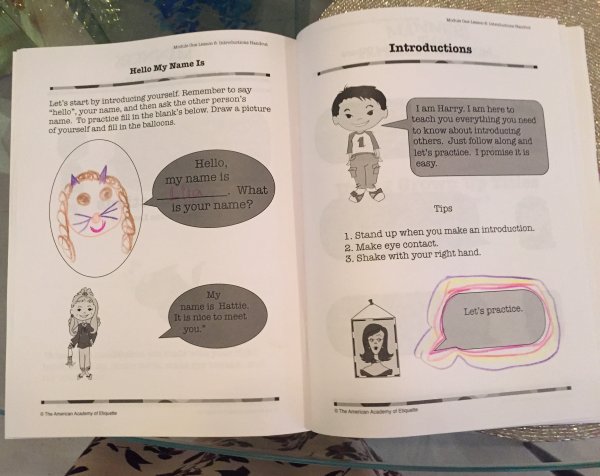
Handshakes: Have you considered starting your day with a handshake and greeting each student with a handshake in the morning? Doing this provides so many teachable moments. You can teach eye contact, handshakes and conversation skills within a few seconds for each student.
Would you like to teach manners in your classroom? We guide you every step of the way. It is easy. All the work is done for you.
Now is the time to start. We offer an affordable curriculum and if you purchase before September 30, 2019, you can use a COUPON CODE for a discount. The COUPON CODE IS MTG10.
Here are your next steps:
Choose your grade level: We offer all grade levels:
Choose your package: We offer the following lesson plans and bundle options for each grade level:
First Impressions
Communication Skills
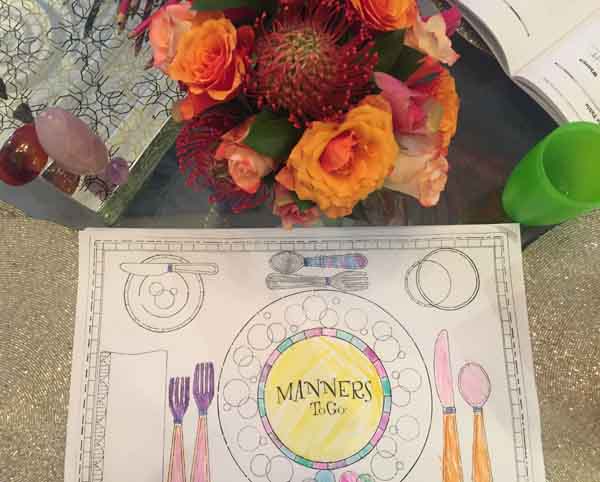
Table Manners
Bundle of all three
Download, Teach and Transform:Our curriculum is downloadable. Once the order is processed, you can begin teaching. Our manners lesson plans are easy to customize. You may teach for an entire semester, 10 minutes a week or focus on the modules for an entire month.
Our curriculum is used for after school programs too.
Manners Lesson Plans: Affordable Pricing Announced on Tuesday, August 13 at 7pm EST | Facebook Live
Life Skills | Character Education | Social Emotional Learning
It is not a secret that teaching manners in your classroom will transform your students.
Maybe you have thought about teaching manners in your classroom already…only to get tripped up by all the research you need to do such as:
Creating the lesson plans
Finding the handouts that are relevant and age appropriate
The suggested dialogue to make it easy for you
And of course all the other things that it will lead to such as the supplies that you might need
The thought of it might make you want to hide in the teacher’s lounge and not come out for a few days! Especially when you have so many other things to think about such as your lesson plans, reading programs, setting your classroom up and not to mention getting your own family ready for school to start.
I have been teaching manners to children for years so I have learned a think or two and I am about to share the process with you.
Today, I am making an announcement that will save the day. This is a BIG DEAL. You will not want to miss this.
Take a step back and don’t be overwhelmed by something else that you have to teach. We have your back on this one.
We have a step-by-step process that we promise will make you the hero at your school. Who doesn’t want to make a difference for students?
Your students need your help on this one.
Are you wondering what this is all about? Well, you are in luck!
An Important Manners Lesson for the First Day of School: Preparing for the New Student in Your Classroom
Have you ever been the new student at school? It is not easy. Today’s article and video (below) gives tips on how to involve your students while at the same time providing a lesson on using good manners at school.
Put yourself in the shoes of the new student. Wouldn’t it be nice to have some personal attention during this tough transition?
By becoming aware of the new students, it gives your students the chance to practice:
Good character
Kindness
Empathy
Manners
Respect for others
Life skills
Conversation skills
Involve your students. Ask their thoughts on how they can help someone integrate into your school. Here are some ideas:
Tips to Help the New Student at School
Choose a student: Select a student to sit with the new person during lunch for the first week of school.
A list of questions: As a class, create a list of questions to ask the new student. This is a great exercise and promotes conversation skills.
Show them around: Instead of handing the new student a map or nothing at all, provide a human touch and have a student show them how to proceed through the line at the cafeteria, walk them to the library and where the restrooms are located.
Print and customize to meet the needs of your students and timeframe. You decide how many modules to teach at at time. You may teach a lesson for 10 minutes or an entire week at a designated time. Many schools use our curriculum for after school programs.
Teach and Transform. Read testimonials from other educators. All the praise is located on our website.
Watch the video for more ideas and teachable moments to use in your classroom:
Our work is featured in the New York Times, Parents Magazine, The Huffington Post, Fox News Channel and the Today Show website. We develop teaching curriculum for all grade levels.
We are here to help guide you on making a meaningful mark on today’s youth.